Tampilkan postingan dengan label Ashokan edict. Tampilkan semua postingan

Ashokan minor rock edict of Nittur

The discovery of Asokan Minor Rock Edicts I and II at Nittur were reported in the newspapers late in the year 1977. The Nittur inscription raises the number of MRE I copies discovered in Karnataka from six to seven and that of MRE II versions from three to four. The existence of the two boulders with some writings on them was reported by E Visvanatha, a junior engineer of the Office of the Senior Geologist at Bellary to the Department of History and Archaelogy, Karnatak University, Dharwad. The inscription is situated 1½ kms south of village Nittur, Shirguppa Taluq in Bellary district.

March 8, 2013
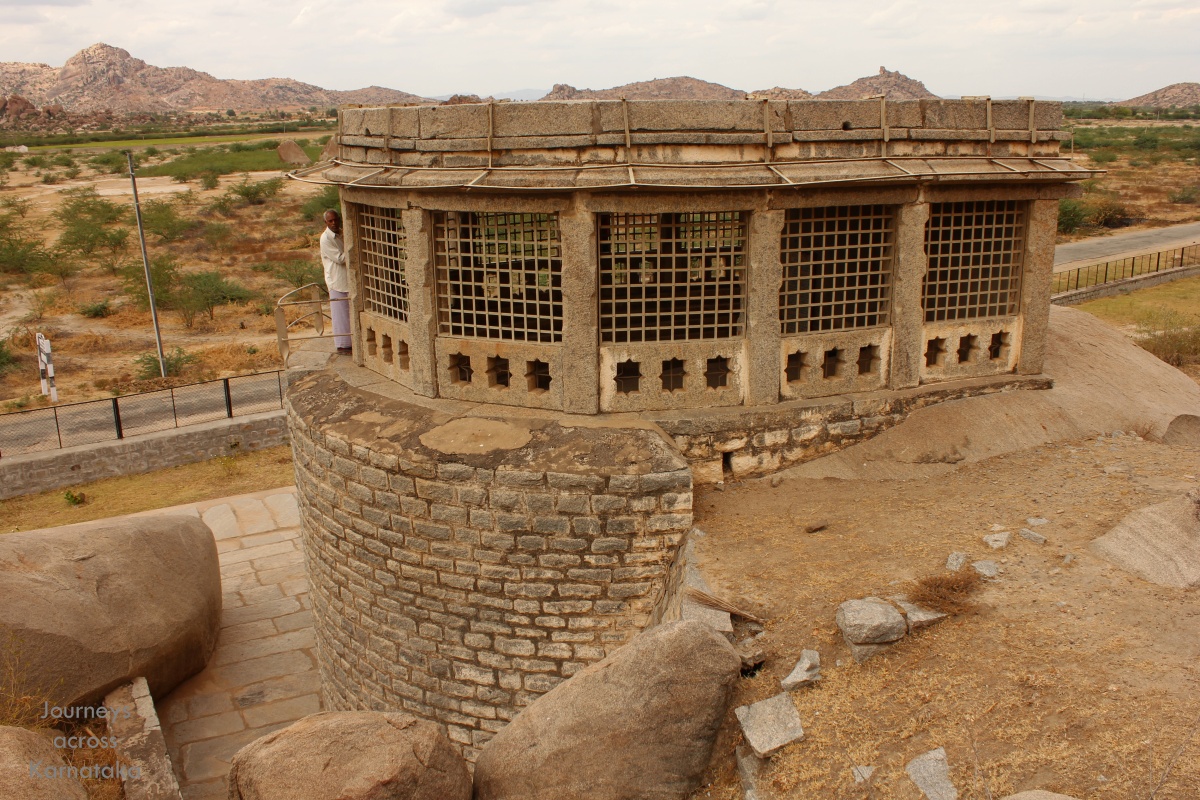
Tekkalakote fort, Varavi Malleshwara temple, Asoka's edict at Udegolam, Nadivi fort.. those are the places we visited before coming to Asoka's edict of Nittur. Weather was warm but the carpet of paddy fields gave a cooling effect to the eyes. The edicts are situated at the base of a rocky hillock. The two granite structures in the center of the picture are recent creations to protect the boulders from sun and rain.
We could drive to the base of the hillock, we parked our cab near boulders. The care-taker was there alone. He was expecting us; his friends at Udegolam site had called informed about our visit. He said he was expecting us earlier, I told him about our little visit to Nadivi fort before coming here. I walked into one of the fields to get a view of boulders and part of the hillock.

Like Udegolam site, Nittur site also has two minor rock edicts. I'm assuming that boulder on the left has MRE I and on the right is MRE II.

Here we are looking at the 10' high boulder, on the surface facing is the inscription.

That's Mr.Prakash, the care-taker. We appreciated his sense of duty, the monument is kept clean and tidy. However, we were surprised at the absence of signage for such an important inscription.

The inscription is in Brahmi script and language is Sanskrit. This is MRE I- has 7 lines covering an area measuring 4' high x 18½' long. Letters' are 3½" to 8" high.

Now I turn to 'Ashokan Studies" a book by D C Sircar, to learn more about the inscription. Thanks to Mr. S B Hiremath, Director In-charge, Kannada Research Institute, Karnatak University, Dharwad for lending me this book. Incidentally, back in 1977 Mr. S B Hiremath was a member of the team from KUD who was here to document the newly discovered edict, he was a student at that time. He remembers spending four days at the site; a makeshift shelter was erected to protect them from wind and rain. Coming back to the book, it has information about recently discovered edicts of Emperor Asoka. Besides information about the discovery, transliteration and translation of the inscription, it also has photos of the impression sheets. Here are the scanned copies.

Picture source: Asokan Studies by D C Sircar

TRANSLITERATION of MRE I
1. (I) Deva[nam]piyo he[vam] aha (/*) (II) adhvi(dhi)kani adhatiyani [va]sani yam..
2. [u]pasake [no cu] kho b[a]dham pakamte husam ekam [sa]mvacharam (/*) (III) satireke tu kho samvachare yam maya sanghe u
3. puyi[te].. ca me pakam[t]e (/*) (IV) imi[n]a kalena amisa....munisa Jambudipasi mi[sa] [deve]-
4. [hi] (/*) (V) pakamasa hi [iya]m pha[le] (/*) (VI) [no] hi iyam [mahapten=eva] sake papotave (/*) (VII) kama[m]         [khuda]ken=api paka9ma0mi[ne]ua vi[pule] [svage]
5. sake aradhayitave (/*) (VIII) [sa] [e]taya iyam a[tha]ya [savane] savapite yatha [khu]daka ca ma[ha]pa ca imam pakameyvu am[t]a pi ca me [jane]y[vu] ti (/*)
6. (IX) cira-thitike [ca] i[ya]m pake(ka)mehoti (/*) (X) imam ca v[ip]u[le] vadh[isiti] [badha]m ca vadhisti avaradhiya diyadh[i]yam [vadhis]iti (/*) (XI) iyam ca savapite[ne]
7. [sa]vapite v[yu]thena [200 50 6] (/*) (XII) [sava-pa]thaviyam ca viva[s]ite ti (/*) (XIII) yatha ra[j]a Asoka aha tatha(tha) ti (//*)

TRANSLATION of MRE I
(I) Thus saith the Beloved of the Gods.
(II) It is more than two years and a half that I have become an upasaka (i.e. a lay follower of the Buddha), but was not excessively zealous [in the cause of Dharma] for one year.
(III) However, it is more than a year that I have been intimately associted with the Sangha (i.e. the Buddhist Church) and have been exerting myself [in the cause of Dharma].
(IV) By this time, in Jambu-dvipa (i.e. Asoka's empire), people who were unmingled (with gods) have been mingled with the gods.
(V) This is the result of [my] exertion [in the cause of Dharma].
(VI) Indeed, it is not only the big (i.e. rich) men who are capable of achieving this.
(VII) Even the small (i.e. poor) man, who exerts himself [in the cause of Dharma].
(VIII) Thus this declaration has been issued for the purpose that small and big men i.e. the rich and the poor exert [in respect of] this [matter] and the people living on the borders [of Asoka's empire] may know [about it].
(IX) And [in this way] this exertion [in the cause of Dharma] becomes everlasting.
(X) This exertion will increase to a considerable extent, will increase greatly [and] will increase more or less to one and half times.
(XI) This declaration has been issued [by the king] when he was away [from his capital on a tour of pilgrimage after the elapsing of] 256 [nights i.e. days of the tour].
(XII) {This edict] has been dispatched throughout the entire earth (i.e. Asoka's empire).
(XIII) [this has been done] in the way as it was said (i.e. ordered) by king Asoka.

As seen from the side, from the space between the two boulders.

Now we turn our attention to MRE II.

As seen from the paddy field.
As seen from the space between the two boulders.
This is the boulder which carries Asoka's message of peace... the same message Buddha had given the world.

Closer look at the text. This is MRE II; it is in 5 lines covering an area measuring 3' x 19'. Letters are smaller compared to MRE I.

Scanned copies photos of the impression sheets.

Picture source: Asokan Studies by D C Sircar
TRANSLITERATION of MRE II
1. (I) [r]aja Asoko hevam aha (/*) (II) tuphe anapayatha Rajuke (/*) (III) [se] [a]napayisati j[a]napadam ca janam Rathikani ca (/*) (IV) mata-pitusu sususita [v]iya ti (/*) (V) [h]evama garusu (/*).
2. (VI) panesu ca dayitaviye[e] ti (/*) (VII) ime dharma-guna pavatitaviya [t]i (/*) (VIII) .. [tu]phe Rajuka anapayatha (/*) (IX) se dan[i] Devanampiyasa vaca[ne][na] [a]na[pay]i[sa]t[i] (/*) (X) se hemava ana[pa[yatha (/*) (XI) he[meva] [ca]
3. Bamhanani ca hath-arohani ca karanakini ca yug-a[cariyani] ca (/*) (XII)..........[yadisi] [po]rana pakit[i]..(/*) (XIII)..[ana][pa]y[i]sati (/*) (XIV) ..sususitaviya ti (/*) (XV) iyam apacayitaviye ti (/*) (XVI) acaliye apacayi-
4. taviya ca sususitaviya ca (/*) (XVII) ye acali ..............................ti (/*) (XVIII) [i]yam [ya]tharaham [pa]vatita[v]iy[e] ti y[a]d[i]si porana paki[t]i (/*) (XIX) yatha.
5. hi satireke huveya tatha pavititav[i]ye [ti] (//*)

TRANSLATION of MRE II
(I) Thus saith king Asoka
(II) You (ie.e the Kumara and his Mahamantras) [should] pass orders on the Rajjuka
(III) He will pass oredres on the people of the countryside as well as on the Rastrikas.
(IV) "[One] should be obidient to [one's] parents."
(V) "In the same way, [one should be obidient] to one's elders."
(VI) "[One] should be kind to the living beings."
(VII) "One should propound these attributes of Dharma."
(VIII) [Thus] you should pass orders on the Rajjuka.
(IX) He will then pass orders [on his subordinates] in the words of the Beloved of the Gods.
(X)  Therefore you should pass orders [on the Rajjuka].
(XI) And in the same way, [orders should be passed on] the Brahmanas (i.e. the teachers of the Brahmana community) elephant riders, scribes and charioteers.
(XII) '[You should instruct your pupils] in accordance with what is the ancient usage'
(XIII) [He, i.e. the Rajjuka] will pass orders [as follows].
(XIV) "[The instruction] should be obeyed [in the same way.]"
(XV) "This should be held in respect."
(XVI) "The teacher should be honoured and obeyed."
(XVII) "Again, those who are the teacher's [kinsmen, among them also the instructions should be established.]"
(XVIII) "This should be established in the proper manner in accordance with what is the ancient usage."
(XIX) "{This] should be established in such a way that it becomes abundant."

Video link to Asokan edict of Nittur.

Here's a map of Nittur-Udegolam area. Roads connecting Tekkalakote and Udegolam/Nittur are dirt tracks but surface is good.


Tekkalakote to Udegolam site = 6½ kms
Udegolam site to Nittur site = 3½ kms
Tekkalakote to Nittur site = 10 kms

Today we are keeping up with the itinerary, the progress is good so far. Next on our list is Halaekote, a fort between Tekkalakote and Shirguppa.

Site Coordinates: 15°32'49"N   76°49'57"E
.........

Ashokan minor rock edict of Udegola

I had spent hours researching Google maps trying to find the exact location of Nittur and Udegolam; found Nittur village but Udegolam was unmarked. Also I wasn't sure if these edicts were within the villages or situated in a remote place like Palki Gundu. Well, I did not want to assume anything.. let me go there.

March 8, 2013
We had left Bellary early; our first stop was Tekkalakote, next was Varavina Malleshwara temple 4 kms east of Tekkalakote. We came back to Tekkalakote, got directions for Nittur. The road was flanked all boulder strewn hills; the very look of those  hills gave a feel of prehistoric human settlements; in fact we could see a couple of rock-shelters on the slopes, perfectly suitable for humans to live in. I eas tempted to stop and explore but the thought of upsetting the itinerary was not a good idea. After couple  of kilometers the tar road gave way to a narrow mud road. At a brick factory the path turned right and left; we entered the paddy belt. It was a carpet of green as far as we could see; we could see rock-formations too. Instead of heading to Nittur straight away we stopped at the first person we met to ask for directions. This person guessed our purpose, he suggested us to see Udegola first, which we were closer to and gave rough directions to Nittur site. Thanks to than man; I was relieved now :-)

A narrow path led to a rock formation; we could see a short flight of steps leading to a small rock shelter protected by brick-wall, grills and doors. I went in and peeped, it was a temple. I scanned the surroundings; behind a clump of Neem trees was a granite structure- close to the left edge in this picture.

There it is- Asoka's minor rock edict of Udegolam.
Two women and a little boy were sitting close by, they told us the care-taker was on sick leave :-(
I offered to take pictures of them but they were too shy, even the kid did not want his picture taken.
Minor Rock Edict II
The edict was inscribed on the entire surface facing us. However, some parts of the inscription was barely visible. I guess trained epigraphists' eyes can catch text better than any layman's eyes.

A closer look- click on the image to enlarge it - that way you'll see the letters.

I guess exposure to nature's forces the surface chips of in layers. I hope this shelter helps preserve it better.

Other side of the boulder. The place is silent and peaceful. I wish I had more time to explore & inspect the rocks behind me. The ladies told us about the second inscription close by ..a minute's walk in the direction we are looking.

Few minutes later a man came, he seemed to be the father of the kid. He accompanies us to the second inscription. Here it is-

Minor Rock Edict I
We were looking at a plain surface, no text. Then a careful, closer look at the rock we could identify faded text.


My heartfelt thanks to Mr. S B Hiremath, Director In-charge, Kannada Research Institute, Karnatak University, Dharwad for lending me the book 'Ashokan Studies by D C Sircar'. All information following this line have been sourced from this book. The author has used the abbreviation MRE for the phrase 'minor rock edict'. There are two types of minor rock edicts- MRE I and MRE II.

The Asokan edict of Udegolam was found seven months after the discovery of Nittur edict. The news was announced in March 1978 by Director of Archaeology, Karnataka. Nittur edict discovery was reported in September 1977. Both sites have MRE I and MRE II.

Nittur edict is in Brahmi script and the language is Sanskrit. MRE I is in six lines, inscription is damaged and most parts are not legible. MRE II is in eight lines and in fairly good condition.

 
TRANSLITERATION OF MRE I
1. ....yam hakam upasake (/*) [no] tu kho badham pa[kamte]....
2. ....[ba]dham ca me pakamte/imina cu k[a]lena / amisa....
3. ...[no] hi iyam ma[ha]pten=eva sake pa....
4. ....etya iyam [a]
5. ....[cira-th]itike ca iyam pakame....
6. ....[savane] savapite [vyu]....

TRANSLITERATION OF MRE II 
1. (I) raja Asoko Devanampiyo hevam apa(ha) (/*) tuphe anapayatha Rajukam (/*) se anapayisiti j[a]napadam [ca] janam Rathikani 2. ca (/*) mata-pitusu sususitaviye ti (/*) hevam=eva garusu (/*) panesu ca [da]yitha(ta)[vi]ye ti (/*) ime dhammaguna pavatitaviya ti (/*) [he]
3. vam tuphe Rajukam anapayatha (/*)se ta(da)ni Deva[nam]piyasa vacanena anapayisati ti (/*) [ta] ta hemava anapayatha ca ti (/*) Bambhanani ca hath-aro[ha]
4. [ni] ca karanakani ca yug-a[ca]riyani ca (/*) [tu] phe nivesayatha amt[eva]sisi(ni)yadisi pora[na pakiti] (/*) [se anapa]yisa[ti ca] (/*) [susu]sitaviye ti / iyam
5. ca apacayitaviye ti / se acariyasa apaca[yi]va(ta)viye ca sususitaviye (ca/*) ye pi ca acariyasa natika / tasu pi yathalaham pavatitaviye ti (/*)
6. hemeva [ca] pati[v]as[i]su pi yatha[la]ham pavatitaviye / ya[di]si porana pakiti (/*) yatha iyam [hi] sati[re]ke huveya tatha pavativa(ta)viye ti (/*) hevam tuphe anapayatha
7. nivesayatha ca amtevasini ti (/*)

I wonder how many edicts of Samrat Asoka remain lost. He did make an effort to change the way people lived.. for the better.

Here's a map of Nittur-Udegolam area. The roads connecting Tekkalakote and these sites are dirt tracks but surface is good.


We say bye to the farmer friend & his family and head towards Nittur.

Video link: Ashoka's Edict at Udegolam.

.........

Ashokan minor rock edict of Brahmagiri

My introduction to Asokan edicts (conveying Buddha's message of peaceful existence) started with Gavimath edict followed by Palki Gundu and Maski sites. Of nine edicts in Karnataka I had visited three. Next on my plan were edicts in Chitradurga district. This map shows the location of three more edicts- Jatinga Rameshwara, Siddapura and Brahmagiri - all within a diameter of 5 kms - situated at the northern tip of the district.


March 7, 2013
First half of the day was spent at Sangankallu Neolithic site. After lunch at Bellary we drove down NH13 towards Chitradurga. We knew we had to turn off the highway few kilometers after Rampura town. Near Rampura bus-stand we stopped to check directions before proceeding. The person whom we spoke to was also going to Siddapura. Our new friend joined us and we got introduced as we traveled. Anantapadmanabhachar is a headmaster of government school at Rampura. He's originally from Siddapura, now settled in Rampura. took us straight to the monument. Here it is- a neat little stone structure to protect the inscription conveying Samrat Asoka's message of peace, situated at the northern base of Brahmagiri hill.

The protective enclosure was locked, no sign of security or caretaker around. We have to content looking through the grills.

The inscription is engraved over an area measuring approximately 9' x 13'. Text is read from this direction.

The letters were clearly visible to eyes but capturing them with a camera needs few trials. For better visibility of letters in the image I had to shoot it from the opposite side i.e. the letters are upside down in this view. This inscription dates back to 300 BCE. Language is Pali and script: Brahmi.

That's our host and Malatesh standing at the door. Malatesh is making a video.

With permission from Mr.S B Hiremath, Director in-charge of Kannada Research Institute (KRI) at Karnatak University, Dharwad I was allowed to refer books at the department's library. After a bit of searching I found transliteration and translation in Corpus Inscriptionum Indicarum Vol I. Thanks to the librarian Ms.Vijayalakshmi Sangam for patiently finding the book needed.

TRANSLITERATION
1 (A) [S]uv[a]mnagirite ayaputasa mahamatanam cha vachan[e]na Isilasi mahamata arogiyam vataviya hevam cha vataviya (B) Devanampiye anapayati
2 (C) adhikani adhatiyani v[a]sani ya hakam....sa[ke]   (D) no tu kho badham prakamte husam ekam savachharam (E) satireke tu kho samvachharem
3 yam maya samghe upayite badham cha me pakamte (F) imina chu kalena amisa samana munisa Jambudipasi
4 mi[s]a devehi (G) pakamasa hi iyam phale (H) no hiyam sakya mahatpeneva papotave kamam tu kho khudakena pi
5 paka[m]i ... nena vipule svage sakye aradhetave (I) e[t]ayathaya iyam savane savapite
6 ............ mahat[p]a cha imam pakame[yu t]i amta cha mai janeyu chirathitike cha iyam
7 [paka] ...........(J) iyam cha athe vadhisiti vipulam pi cha vadhisiti avaradhiya diyadhiyam
8 [vadh]isiti (K) iyam cha savan[e] sav[a]p[i]te vyuthena (L) 200 50 6 (M) se hevam Devanampiye
9 aha (N) mata-pitusu susus[i]taviye hemeva garu[su] pranesu drahyitavyam sacham
10 vataviyam se ime dhamma-guna pavatitaviya (O) hemeva amtevasina
11 achariye apachayitaviye natikesu cha [ka]m ya..raham pavatitaviye

TRANSLATION
(A) From Suvarnagiri, at the word of the prince (aryaputra) and of the Mahamatras, the Mahamatras at Isila must be wished good health and be told this:
(B) Devanampriya commands (as follows).
(C) More than two and half years (have passed) since I (am) a lady-worshipper (upasaka)
(D) But indeed I had not been very zealous for one year.
(E) But indeed a year and somewhat more (has passed) since I have visited the Sangha and have been very zealous.
(F) But men in Jambudvipa, being during that time unmingled, (are now) mingled with the gods.
(G) For this is the fruit of zeal.
(H) For this cannot be reached by (a person) of high rank alone, but indeed even a lowly (person) can at liberty attain the great heaven if he is zealous.
(I) For the following purpose has this proclamation been issued, and (that even) my borderers may know (it), and (that) this zeal may be of long duration.
(J) And this matter will (be made to) progress, and will (be made to) progress even considerably; it will (be made to) progress to at least one and a half.
(K) And this proclamation was issued by (me) on tour.
(L) 256 (nights have been spent on the tour)
(M) Moreover, Devanampriya speaks thus
(N) Obedience must be rendered to mother and father, likewise to elders; firmness (of compassion must be shown towards animals; the truth must be spoken; these same moral virtues must be practiced
(O) In the same way the pupil must show reverence to the master, and one must behave in a suitable manner towards relatives.
(P) This is an ancient rule, and this conduces to long life.
(Q) Thus one must act.
(R) Written by Chapada the writer.

The inscription boulder is situated at the northern tip of Brahmagiri base. This enclosure was built by a British officer; thanks to his initiative towards preserving Indian heritage. I wish our countrymen, especially the so called leaders develop such traits in preserving their own heritage.

Brahmagiri hill looks like a heap of boulders, however the slope close to the edict was gradual slope, we climbed as far as it was friendly, to get a view of the surroundings. In this picture below, the hill at the top-left corner is Jatinga-Rameshwara and in between the narrow longish yellow patch is Hagari; totally dry, all we could see was sand.

Here's a short video by Malatesh.


My wish was to see all three inscriptions but I had no hopes of seeing them all today mainly because of time constraint. I wanted to see Gudekote before sunset so we had leave early. The other reason being not knowing the correct locations of Siddapura and Jatinga-Rameshwara inscriptions. Our friend created little confusion, Anantapadmanabhachar said Bramhagiri edict is the only one here, did not know the existence of the other two. Also, I guessed Jatinga-Rameshwara hill climb will be a long one, something to be done early mornings. We could have looked for Siddapura edict but I let it pass, anyway I have to come back here.

Anantapadmanabhachar wanted to show a Jain temple west of Brahmagiri hill. The temple is well preserved.

The temple interior is as simple as the exterior. It has a mukha-mantapa and a garbhagudi. On the garbhagudi door frame was a small image of Mahaveera in padmasana. Outside the temple we could see three hero-stones and a platform with several sculptures of serpents and a black-stone Ganesha. In this picture below, to the right edge is Siddapura hillock- it seems that Siddapura inscription must be situated there.

Next to the temple was a foundation of another temple, for some reason construction was abandoned. See one of the hero-stones (inset). Opposite the temple is pond, of course its dry now.

So head back, stop for a minute at Gram Panchayath office for Anantapadmanabhachar, he wanted to hand over a letter. We headed back towards Rampura... I was wondering how come our friend is ignorant of the other two edicts ...anyway, when I come here again, I'll ask him to join the search. We dropped off our friend at Rampura and head towards Gudekote to see the little fort over a rocky hillock.

.........

Samrat Ashoka's edict at Maski

I have been researching Ashokan edicts in Karnataka for more than a year now. Here are the list of major and minor rock edicts:

Major Rock Edicts
  1. Kalsi, Uttarakhand
  2. Dhauli, Odisha
  3. Jaugada, Odisha
  4. Girnar, Gujarat 
  5. Sopara, Maharashtra
  6. Sannati, Karnataka
  7. Yerragudi, Andhra Pradesh
Minor Rock Edicts
  1. Bahapur, Delhi
  2. Bairat, Rajasthan
  3. Bhabru, Rajasthan
  4. Gujarra, Madhya Pradesh
  5. Rupnath, Madhya Pradesh
  6. Panguraria, Madhya Pradesh
  7. Sohgaura, Uttar Pradesh
  8. Sahasram, Bihar
  9. Barabar Caves, Bihar
  10. Rajula-Mandagiri, Andhra Pradesh
  11. Maski, Karnataka
  12. Nittur, Karnataka
  13. Udegolam, Karnataka
  14. Gavimatha, Karnataka
  15. Palkigundu, Karnataka
  16. Brahmagiri, Karnataka
  17. Jatinga-Rameshwara, Karnataka
  18. Siddapur, Karnataka
9 of 24 edicts are in Karnataka i.e. one major edict and eight minor edicts. My wish is to visit all 9 sites. So far I've seen 3 sites, Gavimath & Palki Gundu at Koppal and Maski.

December 25, 2012. This was the 4th day of our 5 day trip to Raichur and Yadgir districts. We had left Raichur by 6AM, stopped at Kavital to visit Tryambakesvara temple, had breakfast and arrived at Maski by 9-30. With help from locals, we found the monument easily.. a kilometer away from the town on Maski-Mudgal road. There it is, a large rock formation behind the tree.


The monument seems well protected and maintained. The place has a peaceful ambiance.

The boulder with inscription is inside the locked cage under the rock overhang.

Its cool in here, very silent except for birds chirping near by and sounds from sparse vehicular traffic.

We struggled to take pictures of the rock. We found a gap in the mesh wide enough for our camera lenses to peep through.

There are two boards giving out some basic info about the inscription. Here are the transcriptions of both Kannada and English boards:

ಮಾಗದ ದೇಶದ ಮೌರ್ಯ ರಾಜನಾದ ಘನವಂತ ಅಶೋಕನು ತನ್ನ ವಿಶಾಲವಾದ ಸಾಮ್ರಾಜ್ಯವನ್ನು ತನ್ನ ರಾಜದಾನಿಯಾದ ಪಾತಲಿಪುತ್ರದಿಂದ (ಬಿಹಾರದಲ್ಲಿರುವ ಈಗಿನ ಪಾಟ್ನ) ಸುಮಾರು ಕ್ರಿ. ಪೂ.273ರಿಂದ ಕ್ರಿ. ಪೂ.238ರ ವರೆಗೆ ಆಳಿದನು.ಪಟ್ಟಕ್ಕೆ ಬಂದ ಎಂಟು ವರ್ಷಗಳ ತರುವಾಯ ಕಳಿಂಗ ದೇಶದ ಮೇಲೆ ದಂಡೆತ್ತಿ ಹೋದನು. ಜಯವೇನೂ ಬಹು ಪ್ರಯತ್ನದಿಂದ ಲಭಿಸಿತು. ಆಸರೆ ಅಸಂಕ್ಯಾತ ಜನರ ನಿರ್ದಯದ ಸಾವು ನೋವುಗಳನ್ನು ಉಳಿದ ಪುರವಾಸಿಗಳ ಕಷ್ಟ ನಷ್ಟಗಳನ್ನು ಪ್ರತ್ಯಕ್ಷವಾಗಿ ನೋಡಿದಾಗ ಅವನ ಹೃದಯ ಕರಗಿ ನೀರಾಗಿ ಹೋಯಿತು. ಆ ಸಂಕಟ ಸಮಯದಲ್ಲಿ ಬೌಧ ಮತದ "ಆಶೆಯೇ ದುಃಖಕ್ಕೆ ಮೂಲ"ಮುಂತಾದ ತತ್ವಗಳು ಬಹು ಹಿತಕರವಾಗಿ ತೋರಿದವು. ಕೆಲವು ದಿನಗಳಲ್ಲಿಯೇ ಬೌಧ ಧರ್ಮಕ್ಕೆ ಮತಾಂತರಗೊಂದನು. ಬೌಧ ಧರ್ಮದ ಪರಮ ಭಕ್ತನಾದ ಇವನು ತನ್ನ ರಾಜ್ಯದ ಎಲ್ಲೆಡೆಗಳಲ್ಲಿ ಬಳಕೆಯಲ್ಲಿದ್ದ ಬಾಷೆ ಮತ್ತು ಲಿಪಿಗಳಲ್ಲಿ ತನ್ನ ಘೋಷಣೆಗಳನ್ನು ಬಂಡೆಗಲ್ಲುಗಳ ಮತ್ತು ಕಂಬಗಳ ಮೇಲೂ ಕೊರಿಯಿಸಿದನು.

ಅಶೋಕನ ಅನೇಕ ಧರ್ಮ ಶಾಶನಗಳಲ್ಲಿ ಅವನ ಹೆಸರನ್ನು ಉಲ್ಲೇಕಿಸಿರುವ ಎರೆಡು ಶಾಶನಗಳು ದೊರೆತಿವೆ. ಮಧ್ಯ ಪ್ರದೇಶ್ ರಾಜ್ಯದ ದತಿಯ ಜಿಲ್ಲೆಯ ಗುಜ್ಜಾರ ಎಂಬ ಊರಿನಲ್ಲಿ ಇತ್ತೀಚಿಗೆ ಉಪಲಭ್ಯವಾದುದು. ಮತ್ತೊಂದು ಈ ಮಸ್ಕಿ ಶಾಶನವು. ಇವು ಬ್ರಾಹ್ಮಿ ಲಿಪಿಯಲ್ಲಿದೆ. ಅವನ ಶಾಶನಗಳಲ್ಲಿ ಸಾಮಾನ್ಯವಾಗಿ ಬರುವ "ದೇವನಾಂಪ್ರಿಯ" (ದೇವತೆಗಳಲ್ಲಿ ಪ್ರಿಯನು) ಎಂಬ ಬಿರುದಿನ ಜೊತೆಗೆ ಈ  ಶಾಶನಗಳಲ್ಲಿ "ಅಶೋಕನ" ಎಂಬ ವಯಕ್ತಿಕ ಹೆಸರೂ ಉಕ್ತವಾಗಿದೆ.ಆದುದರಿಂದ ಈ ಮಸ್ಕಿ ಶಾಶನವು ಮಹತ್ವವಾದುದು. ಈ ಧರ್ಮ ಶಾಶನದಲ್ಲಿ ಬರುವ ವಿಷಯ ಮತ್ತು ಶೈಲಿಗಳಲ್ಲಿ ಬಹುಮಟ್ಟಿಗೆ ರೂಪನಾಥ್ ಮತ್ತು ಸಹಶ್ರಮ ಶಾಶನಗಳನ್ನು ಹೋಲುವುದರಿಂದ ಇದು ಅವನ ಆಳಿಕೆಯ 13ನೇ ವರ್ಷ ಕ್ರಿ. ಪೂ. 260ರಲ್ಲಿ ನಿರ್ಮಿತವಾದ್ದದೆಂದು ಹೇಳಬಹುದು. "ಪರಮಾತ್ಮನ ಅಪಾರ ಕರುಣೆಯು ಉಚ್ಚೆರಿಗೆ ಮಾರುವಂತ ಕೀಳರಿಗೂ ಸಹ ದೊರೆಯುವದೆಂಬುದನ್ನು" ಕೀಳು ಮತ್ತು ಉಚ್ಚ ಜನರಿಗೂ ತಿಳಿಯ ಪಡಿಸುವುದೇ ಈ ಧರ್ಮ ಶಾಶನದ ಉದ್ದೇಶ.

Ashoka, the great Mourya king of Magadha, ruled his vast empire from Pataliputra (modern Patna-Bihar) between Circa 273 BC to 238 BC. He embraced Buddhism eight years after his coronation immediately after the conquest of Kalinga involving ruthless massacre and deportation of thousands of human beings. As an ardent devotee he propagated Buddhism by engraving his proclamations on rocks and pillars in regional scripts and dialects then prevailing in the country in the boundaries of his empire. Among the many edicts (the other being the one recently discovered at Gujarra in Datia district of Madhya Pradesh)  Written in Brahmi script, where in Ashoka is mentioned by his personal name besides his usual title of "Devanam Priya" (the beloved of he gods) resembling both in style and contents to the Roopanath and Sahasram edicts. This edict is assignable to the 13th beignal year of Ashoka (in Circa 260 BC).

The purport of the edicts is that the persons exalted and lowly, should be told that the immense heavenly bliss is not only to be attained by exalted but it may even be a lowly, whoever chooses to exert himself.

Compared to Koppal inscriptions, etching seems deeper here at Maski. The letters are easily visible.

A closer look at the letters. It's evident parts of the boulder have chipped off.

I recall Shilpa's help in providing information on Palki Gundu edict. I get the epigraphy notebook again. Following is the extract from Shilpa's notes on Ashokan edicts.

Like the Rupnath, Sahasram and Bairat edicts Maski is also a damaged version which was discovered on 27th January 1915 by C Beadon, a gold mining engineering in the neighborhood of Maski, a village in Lingsugur taluq of Raichur district of the Nizam's dominion about 46 miles West-SW from Raichur. C BEadon sent a message to Rao Bahadur H Krishna Sastri in Archeaological Survey of India (ASI). then J Fleet and B L Rice also visited the place and published in Royal Asiatic Society (RAS).

Since Ashoka's inscription was found near Maski, it must have been a notable town. Maski was an important place because it was the capital of many dynasties. 

Evolution of the name Maski: Mosangi > Mosagi > Mosgi > Masgi > Maski
The name was spelt differently by different communities; Masgi or Masigi by illetrate agriculturists, Maski by Brahmans and Masgi by Muslims.

In the Chalukyan inscription of the time of Jayatekamalla in Saha 949 its called "Rajadhani Priya - Mosagi" i.e. the royal residence of great Mosagi. Another inscription by the same king of the village Brahmapuri of Mosagi. A later record of the Yadav king Singhana of 13th century calls the place again "Rajadhani Priya - Mosagi." In two other inscriptions of this place belonging to the reigns of Achyutaraya and Sadasivaraya, its name is mentioned as Mosage, the chief town of Mosage-nadH Krishna Sastri gave a careful transcript and translation of Maski inscription (with plates) in Hyderabad Archealogical Series No.1: The New Ashokan Edict of Maski 1915.

The cavern in which the  inscribed boulder stand is formed by a huge rock resting at various points of its periphery on other smaller ones, some of which are partly buried in the gravelly soil below. The boulder, which is a block of crystalline grey granite of irregular shape stand at the southern entrance into the cavern, with the writing facing inwards. The surface of the boulder has peeled off at various places sometimes right into the depth to which the letters was incised and measures roughly 8' 9" by 5'. The chief interest of the Maski inscription consists of the fact that the king is not only called Devana Priya but also Asoka - a name which was hitherto known only from Buddhist litreature and Puranas.

Transcription:

Translation:
A proclamation of Devanampriya Ashoka. He orders thus: more than 2½ years have passed since I am a upasaka. A year or more back (I was not very zealous). I am devotedly attached to Buddhists clergy. I am after visiting the Sangha. In that period (formally in Jambudhipa those Gods did not mingle with people with people are mingling now.It can be achieved by the low born also if they are very much associted with dharma. Gods are not connected only to the (uda) high class people but also can be achieved by (khudake0 poor man. cavataviya - it is told that both. if you follow my proclamation both can achieve the goal. If you follow this it is going to go o increasing abd become everlasting.

As we were about to leave, a local lad turned up. We got introduced, his name is Prashant Devreddy Achappanavar, a PUC I student. He had come here to read his college book in peace. He told us about the recently discovered prehistoric skeletal remains on this hill. I asked if he knows the spot, he wasn't sure, said its high up in the hill. then he told us about a protected monument close to this place, a mound just behind Devanam Priya college on the outskirts of Maski. We asked him he could show us.. yes :)

The college was just a minutes drive. That's the mound Prashant wanted to show us. Two government boards declare this mound protected. Prashant also told that this mound is related to Emperor Ashoka's era and government has imposed a ban on digging here and within 100' of this mound. That's Prashant and Mohan mama.

On the western edge is a granite boulder sticking out from the mound, on it are etchings of animal figures and text.

A pair of fish and some unidentified figures.

A square has been etched out but its blank. Perhaps, this was done for some message to be inscribed.

Etching which look like text.

One of the drawings looked like a horse to Malatesh.


The protected mound, Devnam Priya PU College and Maski hill.

We thank Prashant and drop him off near the Ashokan edict and we continue our journey towards Mudgal.

Here's a video of the edict and the protected mound.


.........
Older Post ►
eXTReMe Tracker
 

Copyright 2011 Journeys to temple is proudly powered by blogger.com