Dec 16, 2011
I call this little temple a twin of Ravalaphadi, both share similar characteristics. Locals call it Myanada Basadi (wax temple) or Jaina Basadi.

The temple has two sections- outer and inner. The outer section is open hall with sculptures on either faces and the ceiling. Two fluted columns with square bases decorate the wide doorway to the inner section.

The inner section has four sub-sections; a hall and three sanctums. Mahaveera's image in the Garbhagudi. The steps leading into the Garbhagudi and the Lotus in the middle of the floor.

Garbhagudi's on the left and right sides are pretty plain.

Mahaveera with an umbrella over his head.

Ceiling is decorated with floral art, Lotus being the dominant one.

Images of Jain Gods on either ends of the outer hall.


A Lotus in full bloom adorns the outer hall ceiling.

A pair of fishes compete for presence with the Lotus.


Done with the temple in few minutes, I venture out to explore the surroundings. Signs of quarrying can be seen on this rock-bed.

Two inscriptions in Kannada on the face. On the left half you can see sculpture marks. Perhaps a smaller temple or a shelter was planned and abandoned for some reason.

Few minutes of studying water marks on these rocks here, I felt this was a bathing place.

Closer look at the Halegannada inscription and marks of flowing water to the right side.
 Outline marks gives an idea of how work was planned.

I went up trying to locate the path of downhill stream. During rainy seasons, water from this hill would flow down creating cascades and waterfalls. This slight overhang in the rock would have been a place for our ancestors thousand of years ago and shepherds of modern times.
 My wish to see per-historic rock-paintings makes me take serious looks at any color on rocks. I'm not sure if this is an art work of our ancestors' or Mother Nature's.
 More quarrying activity close-by.
 Look carefully to find an inscription in the lower half of this picture.

Even though hundreds visiting Aihole drive close by, some notice but few bother to check out this simple yet beautiful monument.
A short video-
.........
I call this little temple a twin of Ravalaphadi, both share similar characteristics. Locals call it Myanada Basadi (wax temple) or Jaina Basadi.
The temple has two sections- outer and inner. The outer section is open hall with sculptures on either faces and the ceiling. Two fluted columns with square bases decorate the wide doorway to the inner section.

The inner section has four sub-sections; a hall and three sanctums. Mahaveera's image in the Garbhagudi. The steps leading into the Garbhagudi and the Lotus in the middle of the floor.

Garbhagudi's on the left and right sides are pretty plain.

Mahaveera with an umbrella over his head.

Ceiling is decorated with floral art, Lotus being the dominant one.

Images of Jain Gods on either ends of the outer hall.


A Lotus in full bloom adorns the outer hall ceiling.

A pair of fishes compete for presence with the Lotus.


Done with the temple in few minutes, I venture out to explore the surroundings. Signs of quarrying can be seen on this rock-bed.
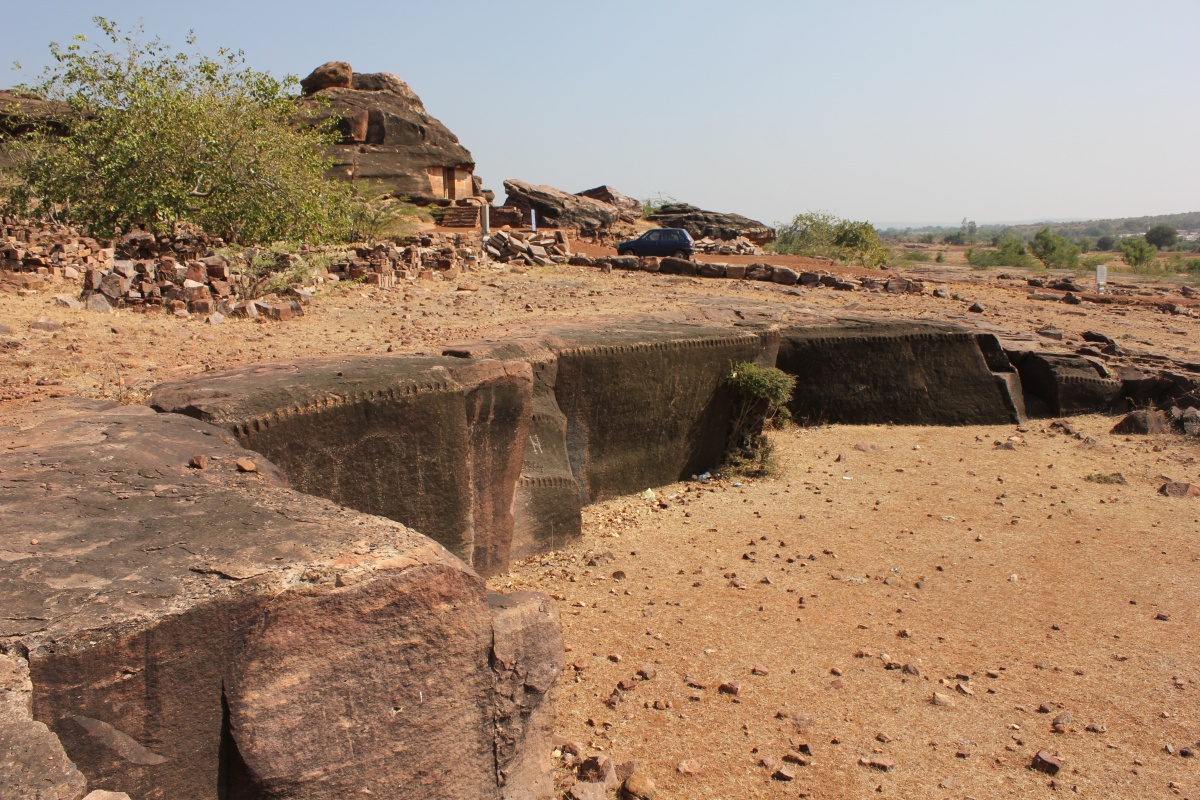
Two inscriptions in Kannada on the face. On the left half you can see sculpture marks. Perhaps a smaller temple or a shelter was planned and abandoned for some reason.

Few minutes of studying water marks on these rocks here, I felt this was a bathing place.

Closer look at the Halegannada inscription and marks of flowing water to the right side.
Outline marks gives an idea of how work was planned.
I went up trying to locate the path of downhill stream. During rainy seasons, water from this hill would flow down creating cascades and waterfalls. This slight overhang in the rock would have been a place for our ancestors thousand of years ago and shepherds of modern times.
My wish to see per-historic rock-paintings makes me take serious looks at any color on rocks. I'm not sure if this is an art work of our ancestors' or Mother Nature's.More quarrying activity close-by.Look carefully to find an inscription in the lower half of this picture.
Even though hundreds visiting Aihole drive close by, some notice but few bother to check out this simple yet beautiful monument.
A short video-
.........
Detail:
Rock-cut Jain Basti, Aihole


