This visit was due pending ever since my visit to the Amminbavi Cave Temple. I'd heard that Aminbavi has a huge well and
an ancient Basadi. The day finally arrived.
April 2, 2011. I left home morning 6-30, passed by Muruga Mutta... I could see early morning walkers going about their rounds. About a kilometer before Amminabhavi I stopped to a well to the left. Looks pretty ancient. People seem to use water but not maintained well.

As I entered the main street I got directions for the directions to the famous well of Amminabhavi... just go down the street, you cannot miss it. There it is.

Few women were washing clothes already. I'd never seen a well this wide. It could be anywhere between 40 to 45 feet in diameter. A stone tablet embedded into the wall states that the well was constructed under VWS scheme 1957. But I felt this well much older than just 60 years.

Sand stone is native to this region.

The well has seven or eight ports for people to draw water. Looks like this is a major source of water for this village.

A colleague of mine happens to live here- Chetana. I called Chetana, we planned to meet at the Jain Basadi. I drove further down the street, parked the car to a side and took the side street leading to the Basadi gate. Chetana was there already, she's my guide to the Basadi.

I was expecting to see a stone temple... the ancient structure certainly has got a modern touch. The premises is kept tidy just like any other Jain Basadi. Two ancient stone elephants watch the entrance.

We stepped in, two elderly ladies were performing pooja.

This painting is symbol of Ahimsa, the Jain principle of Live and Let Live. The painting depicts a cow and tigress existing together in peace, nursing each other's babies.

A laminated poster historical information of Amminabhavi and this Basadi.
ಅಮ್ಮಿನಭಾವಿ ಗ್ರಾಮವು ಬಹು ಪುರತನಡದು. ಕ್ರಿ. ಶ. ಹತ್ತನೇ ಶತಮಾನದ ಕಾಲದಲ್ಲಿ ಚಾಲುಕ್ಯರ ಅಡಿಪತ್ಯಕ್ಕೆ ಒಳಪಟ್ಟ ಒಂದು ಪಾಳೆಗಾರರ ಸಮೂಹವು. ಒಳ್ಳೆಯ ಸ್ತಲವನ್ನು ಆರಿಸುತ್ತ ಈಗಿದ ಗ್ರಾಮದ ಬಯಲಿನಲ್ಲಿ ಬಿಡಾರಬಿಟ್ಟು ಇಲ್ಲಿಯೇ ನೆಲೆಸಿದರು. ಅವರು ಜೈನ ಧರ್ಮಿಯರಗಿದ್ದರು. ಅವರೇ ಅಮ್ಮಿನಭಾವಿ ದೆಸೈಯರು. ಅವರು ಇಲ್ಲಿ ಒಂದು ಬಸದಿಯನ್ನು ಕಟ್ಟಿಸಿದರು. ಹಾಗೆ ಒಂದು ಭಾವಿಯನ್ನು ಕಟ್ಟಿಸಿದರು. ಆ ಭಾವಿಗೆ ತಮ್ಮ ಕುಲದೇವತೆಯಾದ ಪದ್ಮಾವತಿ ಅಮ್ಮನವರ ಹೆಸರಿಟ್ಟು ಅಮ್ಮನವರಭಾವಿ ಎಂದು ಕರೆಯ ಹತ್ತಿದರು. ಊರಿಗೂ ಸಹ ಅದೇ ಹೆಸರು ಅಮ್ಮನವರಭಾವಿ ಎಂದು ಬಂದು ಮುಂದೆ ಅದು ಅಮ್ಮಿನಭಾವಿ ಎಂದು ಪರಿವರ್ತನೆಗೊಂಡಿತು.
an ancient Basadi. The day finally arrived.
April 2, 2011. I left home morning 6-30, passed by Muruga Mutta... I could see early morning walkers going about their rounds. About a kilometer before Amminabhavi I stopped to a well to the left. Looks pretty ancient. People seem to use water but not maintained well.

As I entered the main street I got directions for the directions to the famous well of Amminabhavi... just go down the street, you cannot miss it. There it is.

Few women were washing clothes already. I'd never seen a well this wide. It could be anywhere between 40 to 45 feet in diameter. A stone tablet embedded into the wall states that the well was constructed under VWS scheme 1957. But I felt this well much older than just 60 years.

VWS Scheme
ಸಮಾಜ ವಿಕಾಸ ಯೋಕನೆಯ ನೆತ್ರುತ್ವದಲ್ಲೂ ಕಟ್ಟಿಸಿದ ಭಾವಿ
ಅಮ್ಮಿನಭಾವಿ
1952
Sand stone is native to this region.

The well has seven or eight ports for people to draw water. Looks like this is a major source of water for this village.

A colleague of mine happens to live here- Chetana. I called Chetana, we planned to meet at the Jain Basadi. I drove further down the street, parked the car to a side and took the side street leading to the Basadi gate. Chetana was there already, she's my guide to the Basadi.

I was expecting to see a stone temple... the ancient structure certainly has got a modern touch. The premises is kept tidy just like any other Jain Basadi. Two ancient stone elephants watch the entrance.

We stepped in, two elderly ladies were performing pooja.

This painting is symbol of Ahimsa, the Jain principle of Live and Let Live. The painting depicts a cow and tigress existing together in peace, nursing each other's babies.

A laminated poster historical information of Amminabhavi and this Basadi.
ಅಮ್ಮಿನಭಾವಿ ಗ್ರಾಮವು ಬಹು ಪುರತನಡದು. ಕ್ರಿ. ಶ. ಹತ್ತನೇ ಶತಮಾನದ ಕಾಲದಲ್ಲಿ ಚಾಲುಕ್ಯರ ಅಡಿಪತ್ಯಕ್ಕೆ ಒಳಪಟ್ಟ ಒಂದು ಪಾಳೆಗಾರರ ಸಮೂಹವು. ಒಳ್ಳೆಯ ಸ್ತಲವನ್ನು ಆರಿಸುತ್ತ ಈಗಿದ ಗ್ರಾಮದ ಬಯಲಿನಲ್ಲಿ ಬಿಡಾರಬಿಟ್ಟು ಇಲ್ಲಿಯೇ ನೆಲೆಸಿದರು. ಅವರು ಜೈನ ಧರ್ಮಿಯರಗಿದ್ದರು. ಅವರೇ ಅಮ್ಮಿನಭಾವಿ ದೆಸೈಯರು. ಅವರು ಇಲ್ಲಿ ಒಂದು ಬಸದಿಯನ್ನು ಕಟ್ಟಿಸಿದರು. ಹಾಗೆ ಒಂದು ಭಾವಿಯನ್ನು ಕಟ್ಟಿಸಿದರು. ಆ ಭಾವಿಗೆ ತಮ್ಮ ಕುಲದೇವತೆಯಾದ ಪದ್ಮಾವತಿ ಅಮ್ಮನವರ ಹೆಸರಿಟ್ಟು ಅಮ್ಮನವರಭಾವಿ ಎಂದು ಕರೆಯ ಹತ್ತಿದರು. ಊರಿಗೂ ಸಹ ಅದೇ ಹೆಸರು ಅಮ್ಮನವರಭಾವಿ ಎಂದು ಬಂದು ಮುಂದೆ ಅದು ಅಮ್ಮಿನಭಾವಿ ಎಂದು ಪರಿವರ್ತನೆಗೊಂಡಿತು.
Amminabhavi's history goes back to 10th century AD, during the rule of Chalukyas. People back then settled down in the plains. They were followers of Jain religion. The present day Amminabhavi Desai is a descendant of those settlers. They built a Basadi and a well. The well was named after Goddess Padmavati. The well was commonly called as Ammanavarabhavi meaning Mother's Well. Amminabhavi transformed to Amminabhavi with time.
The columns are beautifully carved and polished.

The ceiling is also decorated with floral designs.

Danapal Upadyaya, the Archaka blessed me by pouring few drops of holy-water on my head. This was a new experience for me. When holy-water was poured on Chetana's head, she held her palm so that water does not fall down. I'll remember to do that when I visit again.
This is the idol of Chouvis Theertankara (Neminath Tirthankara). History is that the idol was taken away from temple and buried in Earth to save it from the destroying hands of Muslim rulers. Idols of Bhagavan Chandraprabha and Bhagavan Mahaveer were installed in the Basadi. Early 20th century, during British rule, while digging earth to close an unused well, the idol was found. The British government claimed the idol and wanted to shift it to London museum but the Jain community wanted the idol installed in the Basadi. A very famous barrister Champatarayar fought for the idol and eventually in 1935 it was reinstalled in the Basadi.

This idol reminded me of the idol at Kasamalagi. The idol, similar in color and finish, was found at Devgaon or Kittur while digging earth at a construction site. Chetana pointed out one characteristic which differentiates two idols; Amminabhavi's idol has an umbrella over the head while Kasamalagi idol has a seven headed snake and an umbrella.
Bhagavan Mahaveer.

Bhagavan Chandraprabha.

Basadi Shikhara.

A smaller temple and a collection of ancient stone-works.


A hero-stone.

Back at the temple front yard, we are looking at the Manastambha. This pillar was installed in 1999.

Jain community symbol.

The painting inside the Basadi depicted on the Manastambha's base.

With morning pooja over, the temple was closed. We went to Chetana's home, it's a minute's walk from the Basadi. I got introduced to parents, brother and sister. Though it was early, avalakki was ready, I relished it. Mr.Desai and I spoke about problems plaguing our agricultural community and other historical monuments of Amminabhavi over tea. Prashant would show me around the village.
First we visited Kalmeshwara Gudi, an ancient Chalukya style temple. Just across the street is Sri Jagadguru Rambhapuri Shanteswara Mutta. The stone arched gateway definitely looks ancient and it's just marvelous.

As we stepped in Lord Hanuman's idol caught my attention. The design is similar to idols I've seen at Parasgad and Gajendragad forts. What ever Hanuman is holding in the hand can also be seen in other places.

The mutta building could be one or two centuries old. Heavy teak pillars lavished with intricate art.

The balcony is elongated C shaped, decorated with lot of wood-work.

We step in, the inside is a quadrangle with a corridor running around. Again we see plenty of wooden pillars holding up the first floor of the building. An impressive structure. The mutta's swami run a school which is located right next door.

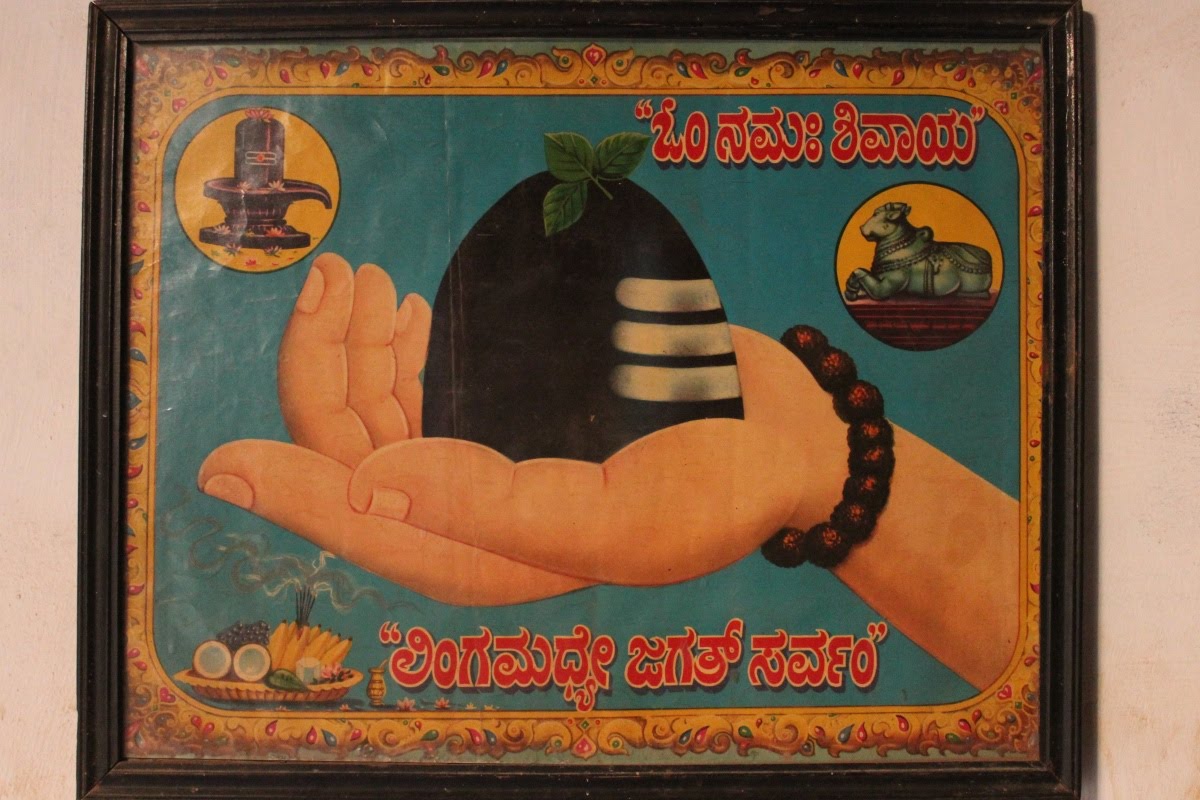
I couldn't resist shooting this picture hung on one of the corridor walls. The picture depicts the right method of holding Shivalinga while offering pooja to it. Text in the picture reads: Om Namah Shivaya, Lingamadhye Jagat Sarvam.

Dhyamavvanagudi.

This is known as Gaddimani, rural gyms for wrestlers. Inside is rectangular pit with it's floor 6 feet below the street level. The pit is floor is mix of sand and brown soil. Four or five wooden clubs were placed in a small pocket in one of the walls. These kids were asking me to get down into the pit. Their smiles gave away the mischief they were up to ...they wanted to see me struggle back up. Cheeky characters!

Next door is Kalmeshwara Gudi, another ancient temple dedicated to Shivalinga. The designs would have been visible of the walls were not painted. Some of the sculptures were pretty neat. this Halegannada inscription seems well preserved.

For me it was a holiday but for Prashanth it was a working day. I decided it's time I let go of Prashant. If not for Desai family, I would've just seen the well and Basadi and left.
If you are ever passing through Amminbhavi do stop by if time permits.
.........
The columns are beautifully carved and polished.

The ceiling is also decorated with floral designs.

Danapal Upadyaya, the Archaka blessed me by pouring few drops of holy-water on my head. This was a new experience for me. When holy-water was poured on Chetana's head, she held her palm so that water does not fall down. I'll remember to do that when I visit again.
This is the idol of Chouvis Theertankara (Neminath Tirthankara). History is that the idol was taken away from temple and buried in Earth to save it from the destroying hands of Muslim rulers. Idols of Bhagavan Chandraprabha and Bhagavan Mahaveer were installed in the Basadi. Early 20th century, during British rule, while digging earth to close an unused well, the idol was found. The British government claimed the idol and wanted to shift it to London museum but the Jain community wanted the idol installed in the Basadi. A very famous barrister Champatarayar fought for the idol and eventually in 1935 it was reinstalled in the Basadi.

This idol reminded me of the idol at Kasamalagi. The idol, similar in color and finish, was found at Devgaon or Kittur while digging earth at a construction site. Chetana pointed out one characteristic which differentiates two idols; Amminabhavi's idol has an umbrella over the head while Kasamalagi idol has a seven headed snake and an umbrella.
Bhagavan Mahaveer.

Bhagavan Chandraprabha.

Basadi Shikhara.

A smaller temple and a collection of ancient stone-works.


A hero-stone.

Back at the temple front yard, we are looking at the Manastambha. This pillar was installed in 1999.

Jain community symbol.

The painting inside the Basadi depicted on the Manastambha's base.

With morning pooja over, the temple was closed. We went to Chetana's home, it's a minute's walk from the Basadi. I got introduced to parents, brother and sister. Though it was early, avalakki was ready, I relished it. Mr.Desai and I spoke about problems plaguing our agricultural community and other historical monuments of Amminabhavi over tea. Prashant would show me around the village.
First we visited Kalmeshwara Gudi, an ancient Chalukya style temple. Just across the street is Sri Jagadguru Rambhapuri Shanteswara Mutta. The stone arched gateway definitely looks ancient and it's just marvelous.

As we stepped in Lord Hanuman's idol caught my attention. The design is similar to idols I've seen at Parasgad and Gajendragad forts. What ever Hanuman is holding in the hand can also be seen in other places.

The mutta building could be one or two centuries old. Heavy teak pillars lavished with intricate art.

The balcony is elongated C shaped, decorated with lot of wood-work.

We step in, the inside is a quadrangle with a corridor running around. Again we see plenty of wooden pillars holding up the first floor of the building. An impressive structure. The mutta's swami run a school which is located right next door.

I couldn't resist shooting this picture hung on one of the corridor walls. The picture depicts the right method of holding Shivalinga while offering pooja to it. Text in the picture reads: Om Namah Shivaya, Lingamadhye Jagat Sarvam.
Dhyamavvanagudi.

This is known as Gaddimani, rural gyms for wrestlers. Inside is rectangular pit with it's floor 6 feet below the street level. The pit is floor is mix of sand and brown soil. Four or five wooden clubs were placed in a small pocket in one of the walls. These kids were asking me to get down into the pit. Their smiles gave away the mischief they were up to ...they wanted to see me struggle back up. Cheeky characters!

Next door is Kalmeshwara Gudi, another ancient temple dedicated to Shivalinga. The designs would have been visible of the walls were not painted. Some of the sculptures were pretty neat. this Halegannada inscription seems well preserved.

For me it was a holiday but for Prashanth it was a working day. I decided it's time I let go of Prashant. If not for Desai family, I would've just seen the well and Basadi and left.
If you are ever passing through Amminbhavi do stop by if time permits.
.........


